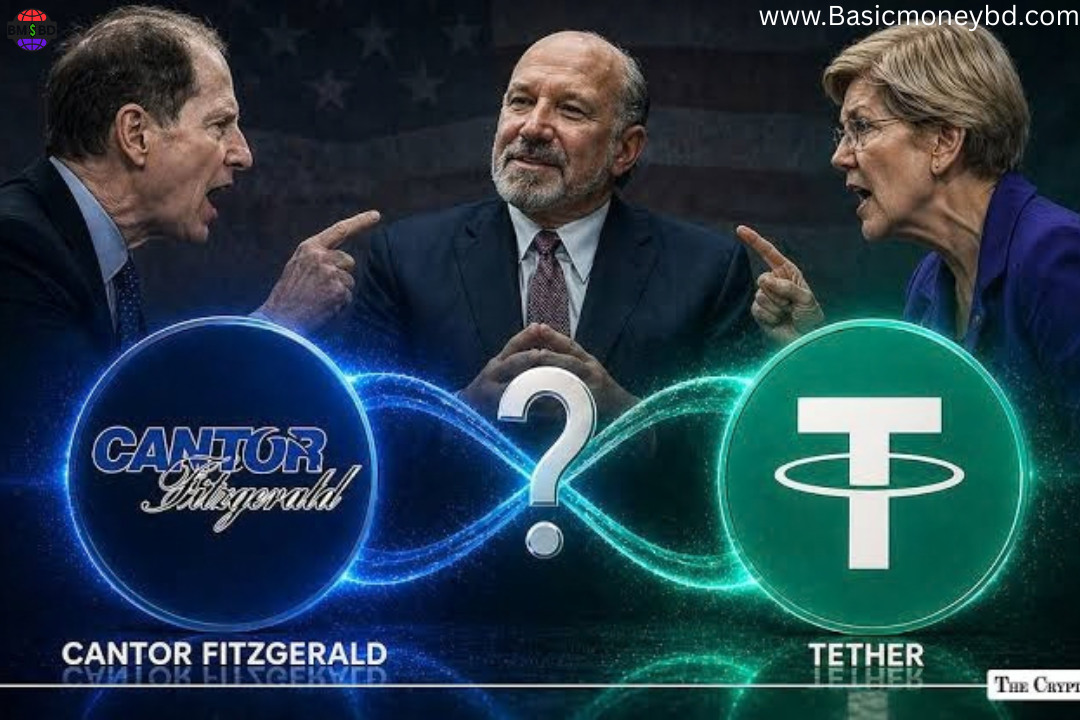
A U.S. Senate Democrat has requested detailed records from Cantor Fitzgerald regarding its business relationship with Tether, the issuer of the USDT stablecoin. The inquiry focuses on Cantor’s reported ownership stake in Tether, reserve custody arrangements, revenue from the relationship, sanctions screening procedures, and communications with government officials.
The October 8 letter from Senator Richard Blumenthal raises questions about whether Cantor Fitzgerald had sufficient information and safeguards to identify potential sanctions risks connected to Tether. The request follows a report released by Democratic staff of the Senate Permanent Subcommittee on Investigations examining the alleged use of USDT by wallets linked to Iran and regional proxy networks.
However, the inquiry does not establish that Cantor Fitzgerald or Tether violated the law. Instead, it seeks records that could help investigators understand the companies’ responsibilities, information access, and compliance procedures.
What Is the Senate Asking Cantor Fitzgerald to Disclose?
Senator Richard Blumenthal, the ranking Democrat on the Senate Permanent Subcommittee on Investigations, addressed the letter to Cantor Fitzgerald chairman Brandon Lutnick. The senator requested documents covering the company’s financial relationship with Tether, including annual revenue, ownership interests, reserve custody agreements, audits, and sanctions compliance policies.
The letter also seeks information about the estimated value and terms of Cantor’s reported ownership stake in Tether. Blumenthal estimates that Cantor holds approximately 5% of the stablecoin issuer, potentially worth around $10 billion based on an implied company valuation. This figure is an estimate rather than a publicly established market price for Tether shares.
Investigators are also asking about payments made to Cantor Fitzgerald and the Lutnick family through their relationship with Tether. Additional questions concern arrangements involving the transfer of Cantor interests to Howard Lutnick’s children before he became U.S. commerce secretary, as well as communications following his departure from Cantor.
These requests remain questions for the company to address, not established findings of misconduct. Cantor was asked to preserve relevant records and respond by October 23, 2026.
Iran-Linked USDT Wallets Raise Sanctions Concerns
The inquiry follows a September 28 report released by Democratic investigators examining 846 cryptocurrency wallets sanctioned or targeted for seizure because of alleged connections to Iran and regional proxy groups.
According to the staff report, 84% of the wallets had transacted exclusively or almost exclusively in USDT. The finding has raised concerns about the use of dollar-pegged stablecoins in financial networks associated with suspected illicit activity.
However, the sample was specifically selected because of its suspected connections to illicit networks. It should not be interpreted as evidence that 84% of all USDT wallets are involved in illegal activity or that the same percentage of Tether transactions is illicit.
The report alleges that Tether failed to freeze certain wallets investigators considered connected to illicit finance. Blumenthal referred the findings to the U.S. Treasury Department and the Department of Justice and called for further investigation.
Determining whether a legal violation occurred requires more than identifying suspicious blockchain transactions. Investigators must establish relevant facts, applicable legal obligations, the parties’ knowledge, and the actions taken in response to potential sanctions risks.
Tether Says It Froze Approximately $550 Million Linked to Iran
Tether has offered a different perspective on its sanctions enforcement efforts. In a September 28 statement, the company said its cooperation with U.S. authorities had resulted in approximately $550 million being frozen across wallets identified as connected to Iran’s central bank and sanctions networks during 2026.
The company cited an April enforcement action involving more than $344 million across two addresses and a July action involving more than $130 million across four wallets.
These figures represent company-reported freezing actions. They do not demonstrate that every prohibited transaction was prevented before funds moved or resolve the investigators’ concerns about specific addresses.
The two accounts highlight an important distinction. Investigators have raised questions about potentially missed opportunities to freeze suspicious funds, while Tether points to substantial balances it says it has immobilized through cooperation with authorities.
The key issues include when particular addresses were identified, when relevant sanctions information became available, and whether the companies acted according to their legal obligations.
Cantor Fitzgerald’s Reserve Custody Role Explained
Tether’s USDT is designed to maintain a value of approximately one U.S. dollar. To support redemptions, the issuer maintains reserves that may include cash, U.S. Treasury securities, and other qualifying assets.
Cantor Fitzgerald has been associated with the custody of Tether’s U.S. Treasury holdings. The Senate letter seeks more information about the precise arrangements, contractual responsibilities, assets involved, and fees paid for these services.
Reserve custody, however, is different from controlling individual USDT transactions.
A reserve custodian may hold securities, process instructions, and maintain records concerning its direct customer. Meanwhile, USDT can move between independent cryptocurrency wallets on blockchain networks without any corresponding movement of Treasury securities held in reserve accounts.
For example, when one user sends USDT to another, the blockchain records the token transfer. The transaction does not automatically require Cantor Fitzgerald to buy, sell, or transfer a Treasury bill.
Redemptions can connect the two systems. When eligible customers return USDT to the issuer, Tether may pay dollars using available cash or proceeds from reserve investments. The precise role played by Cantor in these processes depends on its contractual arrangements.
Therefore, holding reserve assets does not automatically mean that a custodian can control every USDT transfer or freeze an individual blockchain address.
Who Has the Power to Freeze USDT Wallets?
Tether operates administrative controls that allow it to freeze specified USDT addresses on supported blockchain networks. Depending on the relevant token contract, a freeze can prevent tokens held at a designated address from being transferred.
This authority is different from the responsibilities of a reserve custodian. Cantor’s custody of financial assets does not, by itself, provide the ability to freeze tokens directly through a blockchain’s smart contract.
Freezing also differs from confiscation. Immobilizing tokens can prevent their movement, but determining who legally owns the assets or who should ultimately receive them may require additional legal procedures.
Blockchain analysis can help investigators trace transactions and identify potentially suspicious activity. Nevertheless, linking a wallet address to a particular individual or organization often requires additional information beyond publicly visible transaction records.
Timing is also important. An address may be identified as suspicious only after funds have moved through it. Establishing whether a company should have acted earlier requires evidence about when it received relevant information and what actions were reasonably available.
What Happens Next?
The Senate inquiry could provide greater clarity about Cantor Fitzgerald’s financial relationship with Tether, its reserve custody responsibilities, and the compliance information available to the firm.
The requested records may also help investigators distinguish between the responsibilities of a financial intermediary holding reserve assets and those of a stablecoin issuer capable of freezing tokens on supported blockchain networks.
For the cryptocurrency industry, the case highlights broader questions about stablecoin regulation, sanctions enforcement, financial transparency, and cooperation between private companies and government agencies.
USDT’s role in global cryptocurrency markets makes these questions particularly significant. Stablecoins can support payments and trading, but their use in transactions linked to sanctioned entities creates compliance challenges for issuers, financial intermediaries, and regulators.
Ultimately, the outcome will depend on the evidence, the companies’ responses, and any subsequent findings by the relevant authorities. The October 8 letter is a request for information, not a final determination that either Cantor Fitzgerald or Tether committed wrongdoing.
As regulators continue examining stablecoin activity, the distinction between holding reserve assets and controlling on-chain tokens will remain central to understanding who is responsible for monitoring transactions and responding to potential sanctions violations.