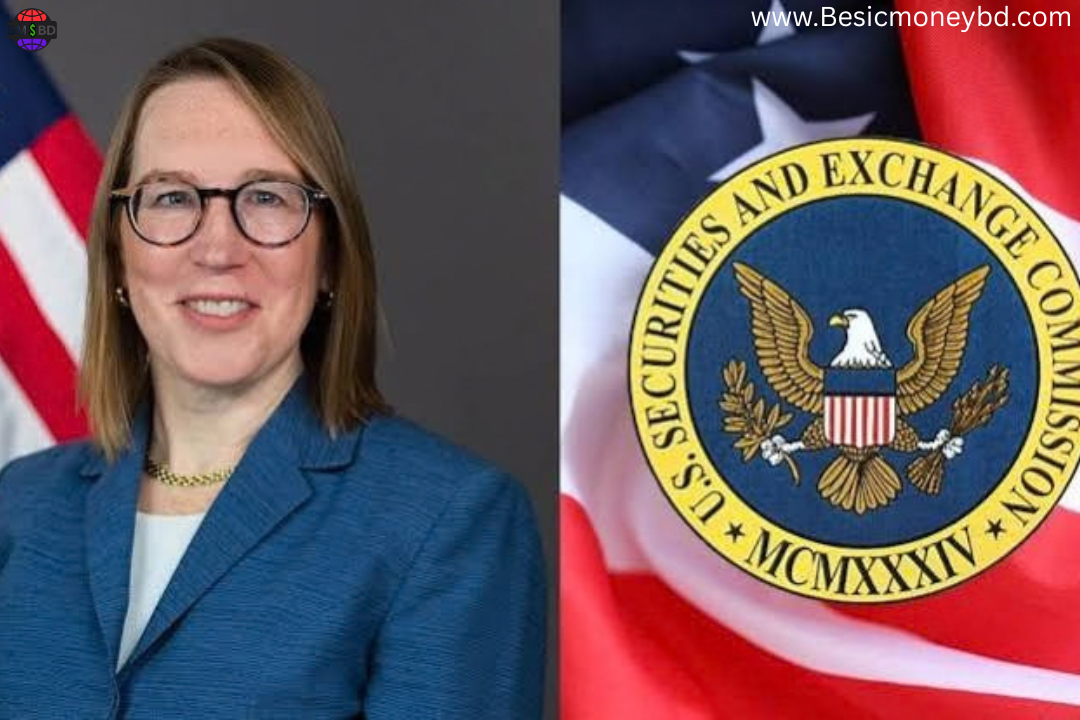
The U.S. Securities and Exchange Commission (SEC) is approaching a significant change in its leadership as Commissioner Hester Peirce plans to leave the agency on October 2. Her departure would leave the SEC with two sitting commissioners, Chair Paul Atkins and Mark Uyeda, unless a replacement is appointed before she exits.
Peirce’s departure comes while the SEC is considering its major proposed crypto regulatory framework, known as Regulation Crypto Assets. The proposal remains open for public comments until October 20, meaning the final 18 days of the comment period will take place after Peirce has left the commission.
Despite the reduced membership, the SEC would still be legally capable of conducting business. SEC Rule 200.41 states that when fewer than three commissioners are in office, the commissioners who remain can constitute a quorum. This means Atkins and Uyeda would be able to act as a two-member commission if Peirce leaves without an immediate replacement.
A federal appeals court has previously upheld the use of such a two-member quorum. In Falcon Trading Group v. SEC, the U.S. Court of Appeals for the District of Columbia Circuit reviewed an SEC decision issued when only two commissioners were serving. The court upheld the agency’s quorum arrangement, providing an important legal precedent for the SEC’s ability to operate with fewer than three commissioners.
However, the two-member structure could still create practical challenges for the SEC’s crypto agenda. While two commissioners can form a quorum, any disagreement between Atkins and Uyeda could prevent the commission from reaching a decision on a matter requiring a vote.
Regulation Crypto Assets Faces Key October Deadline
The SEC issued its proposed Regulation Crypto Assets rule on August 18, with publication in the Federal Register following on August 21. The public comment period is scheduled to close on October 20.
The proposal includes two potential Securities Act registration exemptions for certain investment contracts involving crypto assets. One proposed exemption would cover offerings of up to $5 million over four years, while another would apply to offerings of up to $75 million during a 12-month period.
The proposal also includes a framework under which certain crypto assets could potentially cease being subject to an investment contract after promised essential managerial work has been completed.
However, these provisions are currently only proposals. The publication of the draft does not immediately create new exemptions for crypto issuers. The SEC must first review public comments, determine whether changes are necessary and then vote on a final rule.
If the commission makes significant changes to the proposal, additional notice and comment requirements could also become relevant.
This makes the October 20 deadline an important point in the rulemaking process, but it is not a deadline for the SEC to approve or finalize the regulation.
Peirce’s Departure Changes the Commission’s Dynamics
Peirce has played a prominent role in the SEC’s crypto policy efforts and led the agency’s Crypto Task Force. Her departure therefore comes at a time when the commission is working through several major crypto-related regulatory issues.
Atkins has publicly supported the proposed Regulation Crypto Assets framework, while Uyeda was involved in launching the Crypto Task Force during his time as acting chair in January 2025. Both commissioners have also supported the August proposal.
With Peirce gone, however, only two commissioners would remain if no replacement arrives. Although they would have the authority to form a quorum, the absence of a third commissioner means there would be no additional vote available if the two remaining commissioners disagree.
The situation also corrects an earlier assumption that a two-member SEC would automatically face a quorum problem. The agency’s rules specifically address situations in which fewer than three commissioners are serving, and the D.C. Circuit’s decision in Falcon Trading Group provides historical support for that interpretation.
Other SEC Crypto Actions Continue
The commission’s broader crypto agenda extends beyond Regulation Crypto Assets. The SEC’s September 17 exemption related to stock trading also remains notable, with the published terms providing for a five-year duration.
The coming weeks could therefore be important for the SEC as it manages several regulatory initiatives while operating with potentially only two commissioners.
For Regulation Crypto Assets, the immediate milestone remains October 20, when the public comment period closes. After that, the SEC will need to evaluate the submitted comments and determine whether to modify, advance or otherwise revise the proposal before any final rule can take effect.
Peirce’s October 2 departure does not automatically halt the process. Instead, it leaves Atkins and Uyeda with responsibility for deciding how the commission proceeds once the public comment period concludes.
The final outcome will depend on the commissioners’ ability to agree on the next steps and on whether the proposal requires substantial changes following public feedback.