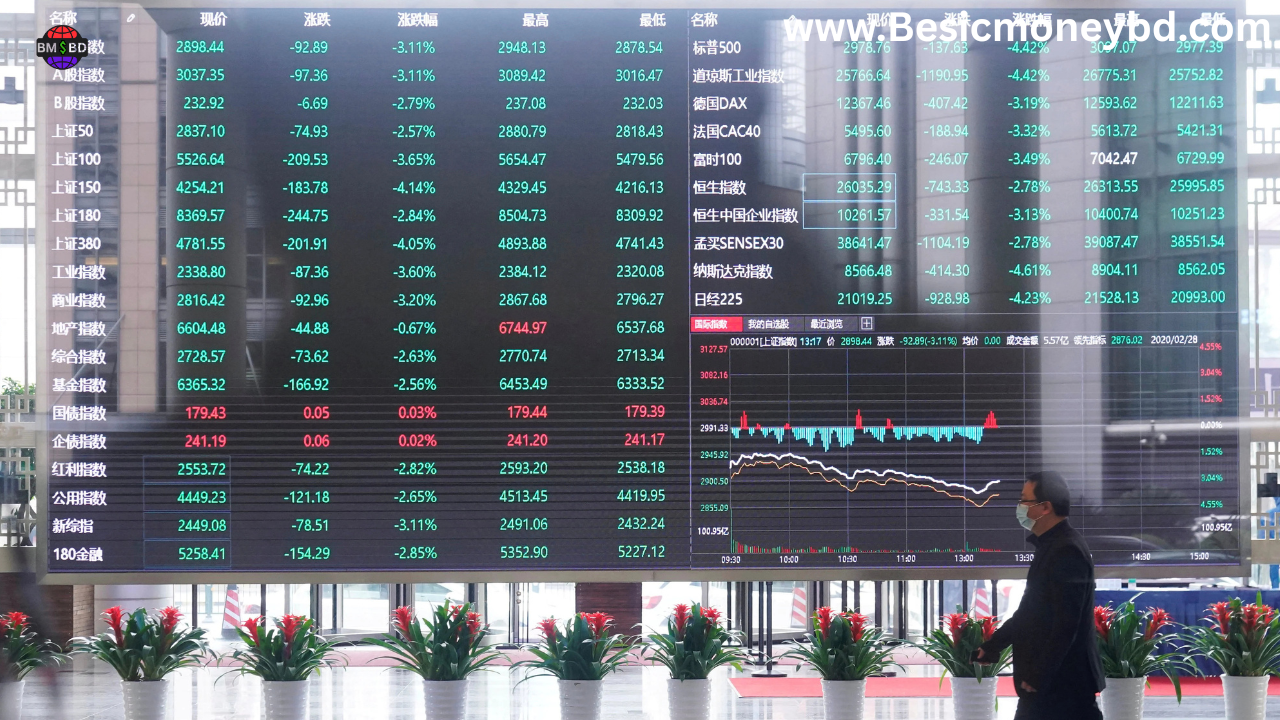
Artificial intelligence is transforming every industry, and financial markets are no exception. In China, quantitative (Quant) trading has become one of the fastest-growing segments of the investment industry, with sophisticated algorithms executing thousands of trades every second. While these technologies have improved market efficiency and liquidity, they have also become the center of an intense public debate following a sharp decline in the Chinese stock market.
After last week’s market sell-off, many retail investors on Chinese social media platform Weibo blamed quantitative funds for worsening the decline. The discussion quickly spread across financial communities, raising an important question: Are AI-powered trading systems helping financial markets become more efficient, or are they making market volatility even worse?
What Is Quant Trading?
Quantitative trading, commonly known as Quant trading, is a method of investing that relies on mathematical models, artificial intelligence (AI), machine learning, and computer algorithms to make trading decisions automatically.
Instead of relying on human emotions or intuition, quantitative strategies analyze enormous amounts of financial data in real time. These systems can monitor price movements, market trends, trading volume, news sentiment, and other indicators before executing buy or sell orders within milliseconds.
Unlike traditional investors who may take minutes or hours to react, Quant systems can place thousands of orders every second, allowing them to capitalize on tiny market opportunities that would otherwise be impossible for human traders to identify.
Today, industry estimates suggest that approximately 20% to 30% of trading volume in China’s A-share market is generated by quantitative investment strategies, making them an increasingly influential force in the country’s financial markets.
Why Are Chinese Investors Criticizing Quant Funds?
Following the recent decline in Chinese equities, many retail investors argued that quantitative strategies intensified the market’s downward momentum.
One major concern involves automated stop-loss mechanisms. When markets begin falling rapidly, many algorithms are programmed to reduce risk by automatically selling positions. As more systems trigger these sales simultaneously, additional selling pressure enters the market, causing prices to fall even faster.
This creates what many investors describe as a “sell-off feeds another sell-off” cycle, where algorithmic trading accelerates market declines instead of stabilizing them.
Another source of frustration is high-frequency trading (HFT). High-frequency trading firms utilize ultra-fast computer infrastructure capable of executing trades in microseconds. Retail investors simply cannot compete with this level of speed, leading many to believe that institutional investors possess an unfair technological advantage.
Chinese individual investors also point to structural differences in market rules. Retail participants generally follow the T+1 settlement rule, meaning stocks purchased today cannot be sold until the next trading day. Institutional investors, however, often have access to additional instruments such as ETFs, stock index futures, and other derivatives, allowing them greater flexibility to manage risk during volatile periods.
Because of these differences, many investors believe quantitative funds have become amplifiers of market volatility rather than providers of market stability.
China’s Regulatory Response
Chinese regulators have responded quickly by increasing oversight of quantitative trading activities.
Authorities are reportedly investigating several quantitative investment firms while also tightening regulations surrounding short selling and high-frequency trading.
Regulators are also strengthening requirements for Quant firms to register their trading systems, disclose algorithmic strategies to regulators, and improve ongoing monitoring of automated trading activities.
Officials have emphasized that quantitative funds should not become “amplifiers of market volatility,” signaling that maintaining financial stability has become a top regulatory priority.
Adding to the attention surrounding financial regulation, former China Securities Regulatory Commission (CSRC) Vice Chairman Fang Xinghai has also come under investigation by China’s anti-corruption authorities. Although separate from quantitative trading itself, the investigation reinforces Beijing’s broader effort to strengthen oversight across the country’s capital markets.
Is China Banning Quant Trading?
Despite widespread speculation, the answer is no.
China is not seeking to eliminate quantitative trading altogether. Modern financial markets increasingly rely on algorithmic trading to provide liquidity, improve price discovery, and enhance market efficiency.
Instead, regulators appear focused on ensuring that AI-driven trading systems operate within stricter regulatory boundaries and do not contribute excessively to systemic financial risks during periods of market stress.
The goal is not to stop innovation but to make sure technological advancement supports market stability rather than amplifying panic.
China vs. The United States: Different Regulatory Philosophies
The current debate also highlights a significant difference between China’s and the United States’ approach to financial regulation.
In the U.S., regulators generally allow market forces to play a larger role, intervening primarily when fraud, manipulation, or systemic risks become evident. Algorithmic and high-frequency trading remain legal, with oversight focused on maintaining fair and orderly markets.
China, however, is more willing to use direct administrative intervention when officials believe market stability is threatened. Rather than relying solely on market self-correction, regulators often step in with new rules, investigations, and restrictions designed to reduce volatility.
This reflects two distinct regulatory philosophies: one prioritizes market efficiency, while the other places greater emphasis on financial stability.
The Future of AI in Financial Markets
The controversy surrounding quantitative trading in China reflects a broader global challenge that financial regulators are likely to face in the coming years.
As artificial intelligence becomes increasingly sophisticated, algorithmic trading will continue expanding across global financial markets. While AI can improve efficiency, reduce transaction costs, and enhance liquidity, it can also magnify market movements when large numbers of automated systems react simultaneously.
The central question is no longer whether AI should participate in financial markets. Instead, policymakers must determine how AI can be regulated in a way that encourages innovation while protecting market integrity.
China’s recent actions may represent an early example of how governments worldwide could respond as AI-driven trading becomes an even larger part of the global financial system.
Final Thoughts
Quantitative trading is neither inherently good nor bad. It is a powerful technological tool capable of improving financial markets when properly managed. However, as its influence continues to grow, regulators face the difficult challenge of balancing innovation with stability.
China’s recent scrutiny of Quant funds demonstrates that the future debate is shifting beyond technology itself. The real question is whether artificial intelligence should simply maximize trading efficiency or also be designed to protect financial markets during periods of extreme volatility.
As AI continues reshaping global finance, the answers to these questions will likely influence financial regulation far beyond China’s borders.