The global humanoid robotics industry has reached another major milestone as Chinese robotics company Unitree Robotics prepares to make history with its Shanghai IPO. Investor demand has been extraordinary, with the retail portion of the offering reportedly oversubscribed by more than 8,000 times. The reported acceptance rate for individual investors is only around 0.018%, highlighting just how intense the appetite for humanoid robotics has become.
Unitree has priced its IPO at 150.80 yuan per share, giving the company a valuation of more than 60 billion yuan, or roughly $9 billion. At that price, the company is being valued at approximately 219 times projected 2025 earnings. Such a premium valuation demonstrates that investors are willing to pay a significant amount for exposure to the rapidly developing humanoid robotics and artificial intelligence sector.
🔥 Why Is the Unitree IPO Getting So Much Attention?
One of the biggest reasons is that Unitree represents something relatively rare in public markets: a company strongly focused on humanoid and advanced robotics technology.
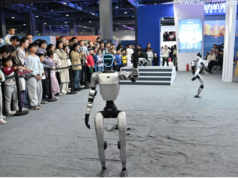
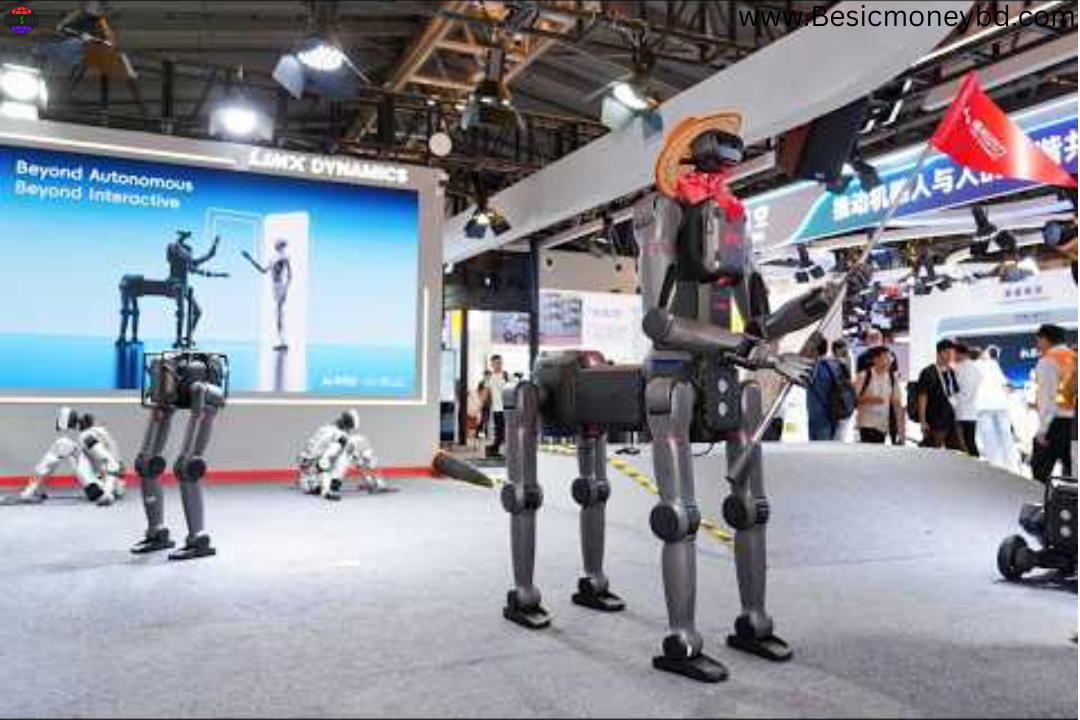
Unitree was founded in 2016 and became widely known for its robotic quadrupeds before expanding aggressively into humanoid robots. Its products include humanoid platforms such as the G1, H1, and R1, which have attracted significant attention because of their mobility, balance, and AI capabilities.
The company is also showing meaningful commercial growth. Unitree reported approximately 1.7 billion yuan in revenue during 2025, while humanoid robots became an increasingly important part of its business. More than 40% of its sales reportedly come from overseas markets, demonstrating that the company is not relying solely on domestic Chinese demand.
📊 The Numbers Behind the IPO
The numbers surrounding the IPO explain why the market is paying so much attention.
- IPO price: 150.80 yuan per share
- Implied valuation: More than 60 billion yuan
- Approximate valuation: Around $9 billion
- Projected P/E: About 219x
- Retail oversubscription: More than 8,000x
- Retail acceptance rate: Approximately 0.018%
- IPO proceeds: Around $900 million
- Shares offered: Approximately 40.45 million new shares
The company plans to use the capital raised through the offering to expand robot development, research and development, new product development, and manufacturing capacity. Around 2 billion yuan is expected to go toward intelligent robot model development.
🤖 A New Benchmark for Humanoid Robotics
The most important aspect of the Unitree IPO may not be the initial stock price itself. Instead, the listing could establish a new market benchmark for how investors value humanoid robotics companies.
For years, investors have struggled to value robotics businesses because many companies were still heavily focused on research and development, with limited commercial revenue. Unitree provides a different example because it already has meaningful sales and has reached profitability.
That makes its public-market valuation particularly important.
If Unitree maintains a high valuation after its listing, investors could begin using it as a reference point when evaluating other humanoid robotics companies. This could potentially benefit the broader ecosystem, including companies developing robotic sensors, motors, batteries, processors, actuators, AI models, and other critical components.
🌎 Implications Beyond China
The impact of Unitree’s IPO could extend far beyond the Chinese market.
Humanoid robotics is becoming a global competition involving companies across China, the United States, Europe, and other regions. Companies are racing to build robots capable of operating in factories, warehouses, logistics centers, commercial environments, and eventually homes.
A successful Unitree listing could strengthen investor confidence in the entire sector. It may encourage more venture capital and institutional money to flow into robotics startups and publicly traded companies.
For U.S. robotics companies, this could also create a clearer valuation comparison. If investors are willing to assign extremely high multiples to a company like Unitree, other companies with strong humanoid robotics technology may receive greater attention from the public markets.
⚠️ But the Valuation Comes With Risk
The enthusiasm surrounding Unitree should not be confused with guaranteed long-term success.
A valuation of roughly 219 times projected earnings is extremely demanding. Investors are effectively pricing in substantial future growth. For Unitree to justify such a valuation, the company will likely need to increase production, expand commercial applications, and continue improving the AI capabilities of its robots.
There are also broader challenges facing the humanoid robotics industry, including manufacturing costs, software development, hardware reliability, competition, and uncertain mass-market adoption.
Unitree’s financial performance also shows why investors need to watch execution closely. Reuters reported that although revenue growth remained strong, first-quarter 2026 profit excluding one-off items declined as research and marketing costs increased.
Geopolitical and trade restrictions could represent another challenge, particularly because Unitree has meaningful overseas sales and the United States has introduced restrictions affecting certain foreign-made robotics products.
🚀 The Bigger Picture: Humanoid Robots Are Becoming an Investment Theme
Despite these risks, the Unitree IPO sends a powerful message: investors increasingly believe humanoid robotics could become a major technology industry.
The combination of artificial intelligence, advanced sensors, powerful motors, computer vision, and increasingly capable hardware is creating a new generation of machines that can interact with physical environments.
This is why humanoid robotics is increasingly being viewed as more than a traditional robotics market. It sits at the intersection of AI, manufacturing, semiconductors, automation, and physical computing.
Unitree’s IPO could therefore become an important moment for the entire industry.
If the stock performs strongly after listing, it could encourage more companies to enter the public markets and attract additional capital toward humanoid robotics. If the valuation falls sharply, however, it could serve as a warning that investors may have priced future growth too aggressively.
🔮 Final Thoughts
The extraordinary demand for Unitree’s IPO shows that investor appetite for humanoid robotics is real and growing rapidly. With more than 8,000x retail oversubscription and an acceptance rate of only around 0.018%, individual investors clearly want exposure to the next generation of AI-powered machines.
The bigger question is whether Unitree can turn today’s excitement into sustainable long-term growth.
If it succeeds, Unitree could become one of the most important publicly traded names in humanoid robotics and potentially establish a valuation benchmark for the industry.
For now, one thing is clear: humanoid robotics has officially entered the mainstream investment conversation. 🤖🔥
Disclaimer: This article is for informational purposes only and should not be considered financial or investment advice.